


India means the land of melody and rhythm filled with emotions, India means the land of those who understand spirituality, full of emotions and feelings, India means the land of sages and saints engaged in the search of the light of knowledge, India means the land drenched in the knowledge of Vedas and Puranas, India means the land where there is an emotion or feeling behind every statement, every thought, every deed. Along with such emotions, multi-coloured diversity, rich cultural heritage and the world's oldest civilization full of spirituality, these are the characteristics of our country. If someone considers it a country with geographical boundaries of only 28 states and 8 union territories, then it is wrong. This country is a country with a population of 140 crores, full of diverse cultural activities, which is not only known for the richness of its demography, history, culture, costumes and language, but also always attracts everyone's attention for the uniqueness, strangeness and scientific nature of its festivals. The arrival of a new festival every few days, the reason and method of celebrating which is completely different, paints a rich picture of Indian culture. This picture is a mixture of religion, spirituality, science, nature, society, happy family, health etc.
Natural and Scientific Viewpoint
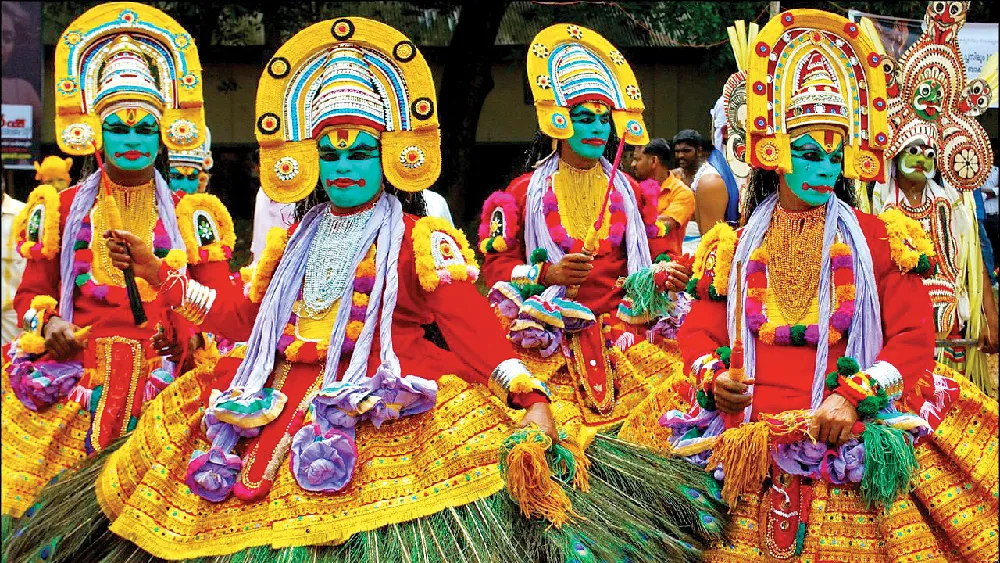
Festivals are the rituals of Indian tradition. The ways of celebrating them, their enthusiasm enhance the color of our country and enrich the culture. Along with special worship, food and fasting, sometimes we worship the Sun and sometimes the Moon. Sometimes we color everyone in our color and sometimes we light a lamp to remove darkness. On the pretext of Raksha Bandhan, we vow to protect our sister, then through Navratri we salute the women power and along with that we kill Ravana every year. The way of celebrating all these festivals is different, the ingredients are different, the time and auspicious moment is different, whether it is food or fasting, everything is not only defined but also scientifically proven. Just think sometime how these festivals were determined? What is the role of the planets and stars in these? And what is the purpose behind celebrating them for centuries? If someone says that festivals in Sanatan Dharma are only a part of a religious ceremony and are limited to some rituals of worship, then such a person will definitely be called ignorant because our festivals are not only a part of religious rituals but they are also full of many scientific and psychological facts. Although with the change of region and language, there is a slight difference in the ways of celebrating these festivals, the beauty of which is also different, despite this, the similarity in them is that all our festivals carry with them familial, social, religious and spiritual perspectives along with natural and scientific perspectives. This mixed perspective of festivals has given such a wonderful color to the thoughts and feelings of this country that it amazes the whole world.
Not a mere flight of imagination
A country with a long series of festivals and celebrations where every day of the year is defined for its specialty and the definition too is not any ordinary one but is based on complete scientific facts and mathematical logic and which benefits not only India but the entire world, this is the specialty of India and Indian festivals and celebrations. If the credit for this is to be given to anyone then it is none other than our sages and saints who took their meditation to such a high level that the light of their knowledge is still guiding modern science and scientists. Space travel, geographical calculations, computers, mobiles, internet including artificial intelligence, all these are seen as important inventions of science. Today we may be surprised about artificial intelligence but ever think how Rishi Intelligence must have been working in India for centuries when our Rishi Munis had the power to see the invisible just by going into meditation, for which today we need so many scientific instruments. This power of Rishi Intelligence was not just a figment of the imagination of the Rishis because now science is also repeating it and this is the reason that the scientific recognition of Indian festivals and the reasons and methods of celebrating them is also increasing.
Understanding the importance of Panch Tatvas
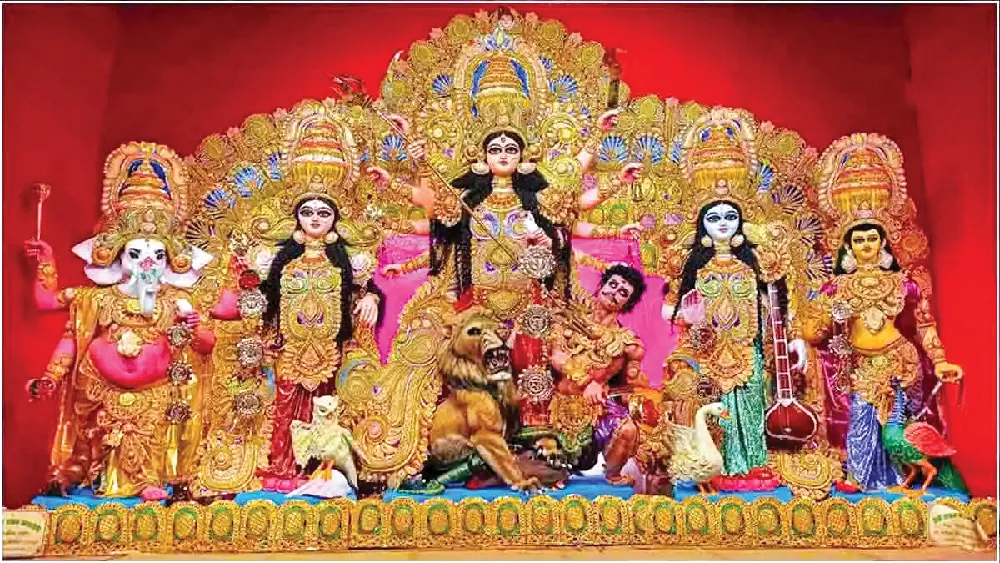
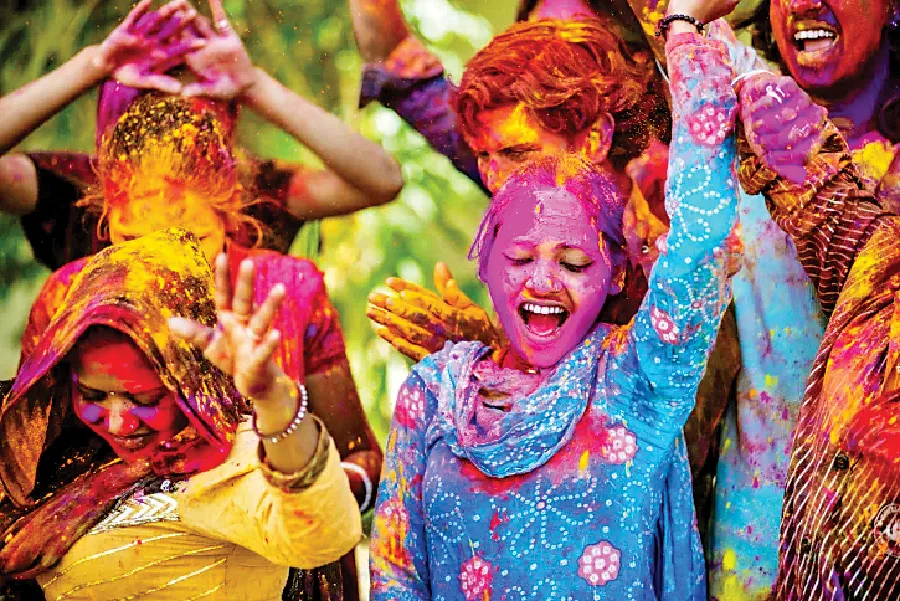
The year 2025 has begun and the calendars have changed. With the changed calendar and the beginning of 2025, the wait for festivals has also begun. The number of these festivals is so much that if one wants, one can keep celebrating some festival every day, not just every month, but every week. The way of celebrating each festival is different and its beauty is also different, that is why India is also called the land of festivals. But the most amazing thing is that the message of every festival ultimately becomes the same and that is the end of inauspiciousness. Inauspiciousness can be in the form of physical or mental illness or family and social discord. This inauspiciousness can be not only in the form of social animosity but also in the form of natural disaster. This is the reason why our ancestors gave the practice of celebrating festivals in different months for every state and community, from north to south and east to west. They weaved the fabric of these festivals in such a way that today it has become an integral part of the life of every Indian. Even if any member of the family is living away from the family to earn livelihood or for studies, everyone tries to return to their family as soon as the festivals arrive. Starting from Makar Sankranti in January, Vasant Panchami in February, Mahashivratri and colorful Holi in March, the tradition of celebrating many festivals like Raksha Bandhan, Janmashtami, Navratri, Vijayadashami, Karva Chauth, Deepawali, Bhai Dooj, Chhath Pujan etc. with pomp and show with songs, music, dance, fasts, and religious rituals not only reflects the rich heritage and vibrant traditions of India, but also makes us aware of the importance of the five elements from which this body is composed. That is why our sages and saints always gave importance to nature in the celebration of festivals and laid down the rules of worshipping trees, plants, animals, birds, sun, moon, river etc. The festival of Makar Sankranti celebrated in the month of January is one such festival that underlines the importance of nature.
Opportunity to connect with divinity
India is located in the northern hemisphere, hence this festival has a very important place in Indian culture which proclaims 'Tamaso Ma Jyotirgamaya'. Though every festival surrounded by traditions and rituals gives some message in the interest of society and nation, the message of Makar Sankranti festival is special which not only provides an opportunity to understand the heritage of nature and its importance but also gives the message to focus on the energy of nature based on scientific facts. Generally, all the dates of Indian calendar system are determined on the basis of the movement of the moon, but Makar Sankranti is determined by the movement of the sun. Sankranti means change of zodiac sign of the sun i.e. transition or entry of the sun from one zodiac sign to the next i.e. Capricorn. Ancient astronomers, scientists, while studying the rays of the sun, divided the path of the sun into 12 parts and called each part a zodiac sign. Thus, the entry of the sun from one zodiac sign to another is called Sankranti. There are a total of 12 Sankrantis in a year and the time between one Sankranti and the other is called the solar month. Makar Sankranti is also mentioned in Skanda Purana and according to it, on the day of Makar Sankranti, the gods come to earth to accept the material offered in the yagya, that is why it is also considered the time of gods and divinity. That is, Makar Sankranti also provides an opportunity to contact divinity, due to which it becomes of special importance for spiritual seekers.
Festivals based on astronomical calculations
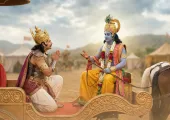
We know that the position of planets and stars is not always the same in the sky and our earth also keeps changing its position. Day and night occur due to the spherical shape of the earth and its rotation on its axis. The part of the earth which is in front of the sun has day and the part which is not in front of the sun has night. This movement of the earth is called daily movement but the earth also has annual movement and it revolves around the sun once in a year. Due to this annual motion of the earth, different seasons occur at different times in its different parts, which is called seasonal change. The calculation of year and month etc. is done by taking the help of this annual motion of the earth. In this sequence, when the movement of the sun is from south to north, it is called Uttarayan and when it is from north to south, it is called Dakshinayan. Thus, the whole year is divided equally into two parts, Uttarayan and Dakshinayan. The zodiac in which the sun's orbit changes is called the transition period. Since the sun changes its orbit every year on 14 January and enters Capricorn from Dakshinayan to Uttarayan, Makar Sankranti is celebrated every year on 14 January. The change in the sun's orbit on the day of Makar Sankranti is considered to be a change from darkness to light. The importance of the sun being in Uttarayan has also been clarified by Lord Krishna in the eighth chapter of Chandogya Upanishad and Shrimad Bhagwat Gita.
Festivals with many forms
The festival of Makar Sankranti is celebrated all over India and its specialty and beauty is different in every state. The festival is one but the traditions of celebrating it are different. For this reason, this festival presents a unique example of the unity and integrity inherent in the diversity of the vast India. In Haryana and Punjab, it is celebrated a day before as Lohri, in which as soon as it gets dark, a fire is lit and the fire god is worshipped and sesame, jaggery, rice and roasted gram are offered as sacrifices. In Rajasthan and Gujarat, there is a special tradition of flying kites on this day, whereas in Uttar Pradesh, it is mainly known as a festival of bathing and charity. In the Gorakhnath temple of Gorakhpur in Uttar Pradesh, a huge crowd gathers from early morning to offer Khichdi on this festival. In Bihar too, Makar Sankranti is known by the name of Khichdi, whereas the people of Assam celebrate it by the name of Magh-Bihu or Bhogali-Bihu. Similarly, the festival of Makar Sankranti is celebrated with great pomp in all the states from Maharashtra, Andhra Pradesh, Telangana to Tamil Nadu, Karnataka and Kerala.
Science of health with bathing and donation
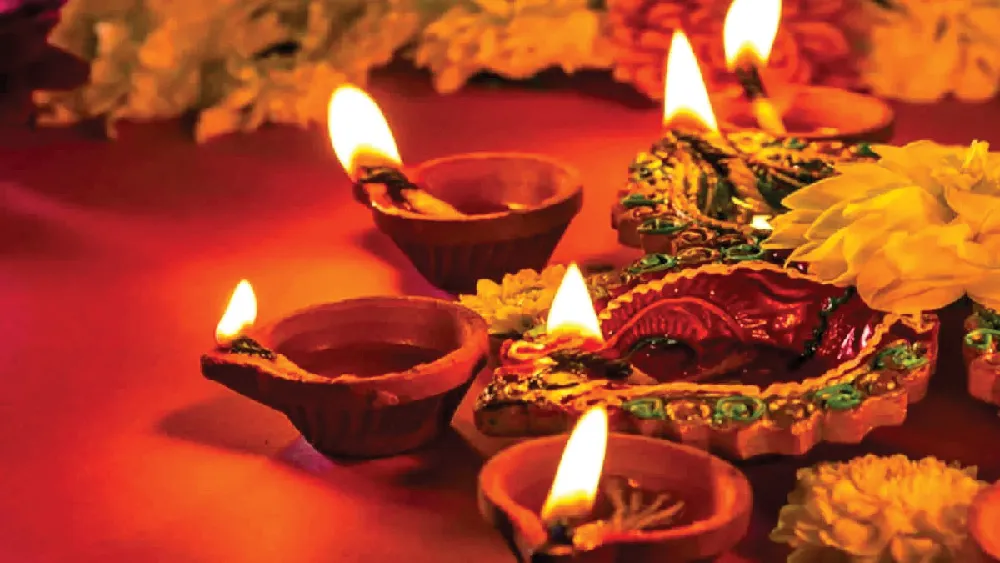
Like every year, this year too the festival of Makar Sankranti will come and go. At dawn, thousands of people across the country will take a dip in the rivers, temple bells will ring, donations will be made in the hope of virtue, khichdi will be prepared in the kitchen as food in the form of prasad, jaggery and chuda with curd will spread their sweet taste and with all this, the market of tilkut and gajak will be decorated and there will be kite flying. How many people would know how much religion, spirituality and science is there in all these features. On one hand, in North India, people stay huddled under the quilt due to cold and on the other hand, there is the practice of bathing in the river in the morning before sunrise. It is possible that some people may find all this contradictory or strange, but the science of health is hidden in this. Little do they know that when the amount of phlegm in the body increases in winter and the skin also becomes dry, then bathing in the river and the rays of the sun both work as a powerful medicine. Not only this, bathing in the river not only calms the inner mind but also removes negative energy. There is also a provision for the consumption of sesame seeds in Makar Sankranti, which is known as a phlegm-killer, nutritious and highly effective medicine. According to Ayurveda, both sesame and jaggery have abundant medicinal and nutritional properties. While sesame increases the amount of good cholesterol and reduces the risk of heart disease by reducing bad cholesterol, jaggery is effective in increasing blood due to being a good source of iron. Similarly, what can be a more easily digestible and healthy food than the khichdi made on the day of Sankranti. According to Ayurveda, moong dal balances the three doshas i.e. vata, pitta and kapha and the khichdi made from it is nutritious and easily digestible and is also very beneficial for the stomach.
Message of Sankranti, not revolution
It is clear that Makar Sankranti is such a wonderful blend of astronomy and Ayurveda that it not only presents a splendid picture of our rich heritage of knowledge but also gives the message of Sankranti, which is different from revolution. Sankranti means that in which there is neither the arrogance of success nor the sorrow of failure. Just like this, to ensure that the colours of the pictures of cultural heritage containing different colours of many festivals do not fade with time, our ancestors first linked them with worship and religious rituals and then gave them to us as a legacy. Now it is our responsibility to imbibe the messages of these festivals and maintain our enthusiasm in celebrating them so that the next generations can also understand the messages of these festivals. Only when we understand the messages of our festivals, the picture of Indian culture will become more rich.
लेखक
Advertisment
Latest News
01 Mar 2025 17:58:05
With divine inspiration, I want to draw your attention towards 11 important facts. I am sure that you will




.jpg)