


Since ancient times, man has been consuming various types of substances, herbs etc., rich in various nutrients, along with food in some form or the other for his health. In Ayurveda, following the rules of 'pathya-apathy aahar-vihaar', 'sam-visham substances' etc. for complete nutrition is considered essential for complete health. By following the method of cooking food in different ways, the time of consuming them, man can remain healthy for a long time. In the history of Indian culinary science, there is a description of the making of multi-purpose laddus by Ayurvedacharyas by mixing ghee and herbs, which was made unknowingly while making medicine. Thereafter, it started being made systematically in which jaggery, dry fruits, some herbs started being used for health benefits. With time, the trend of making different types of laddus increased in India, which are helpful in complete nutrition along with health benefits. If we look at it in today's context, we can understand that nutrition bars are also a new form of it (this is the author's personal opinion). However, the provision of 'nutrition bars' started from the western countries in the mid-twenty-first century. In 1952, York Barbells and Bob Hoffman made and sold their own soy-based protein powder high-protein cookies and bread. Joe Weider launched his candy food bar in the late 1960s. 'Energy bars' were the creation of Pillsbury Corporation, which took advantage of the popularity of the national space program by introducing space food sticks in the 1960s. Since then 'energy bars' have become a kind of their own food. In the mid-1980s, the first 'energy bar', 'power bar' was introduced for athletes, which was made from various types of nutritional elements like 'whey protein', peanuts, almonds, walnuts, soy protein, etc. Today, the business of these ‘protein bars’, ‘energy bars’ is touching new heights globally and is estimated to reach nearly US $ 2 billion by 2026. The Indian context has changed a lot during and after the COVID pandemic. During the pandemic, people turned to healthy and regular living, which increased the trend of people of all ages towards healthy and nutritious food. As a result, the demand for convenient and healthy food (snacks) options increased in the country. The consumption of these ‘energy bars’ is increasing due to increasing health awareness, active lifestyle and awareness about the benefits of consuming a complete nutritious diet in less time. The business of energy bar market in India is expected to reach US $ 20.40 million by 2029, growing at a CAGR (Compound Growth Rate) of 13.56% during the forecast period (2024-2029). During the COVID-19 pandemic, India's energy and protein bar traders started expanding their business to online channels and exporting to various countries.
A variety of nutrition bars were developed by Patanjali by accumulating the knowledge of our sages and combining some medicinal and other nutritious ingredients such as jaggery, honey, etc. Patanjali's nutrition bar category has been designed keeping in mind the nutritional needs of all age groups. Patanjali Immunity bar, Patanjali Classic herbal protein bar, Patanjali Herbal health food bar, Patanjali Energy bar with Choco chips, Patanjali Orange peel Energy bar have been brought to the global level for complete nutrition in accordance with the standards of intensive research and FSSAI (Food Saftey and Standards Authority of India). Patanjali Immunity bar mainly uses herbs rich in various medicinal properties which have been used by Ayurvedacharyas in various diseases (Table 1). Consuming nutrition bars is a favorable option for supplying instant energy, due to which its demand is also increasing. Another major reason is its disposable packaging which prevents it from touching hands directly, thus keeping both the nutrition bar and hands clean.
Table 1: Key ingredients of Patanjali Immunity Bar, their Ayurvedic medicinal uses and major plant components
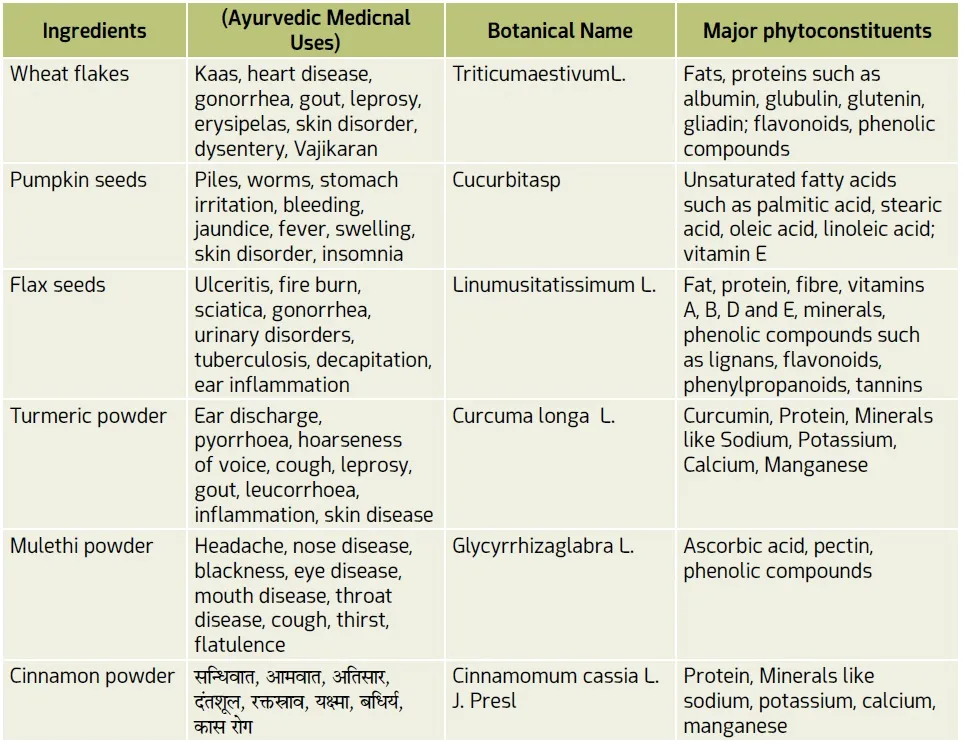

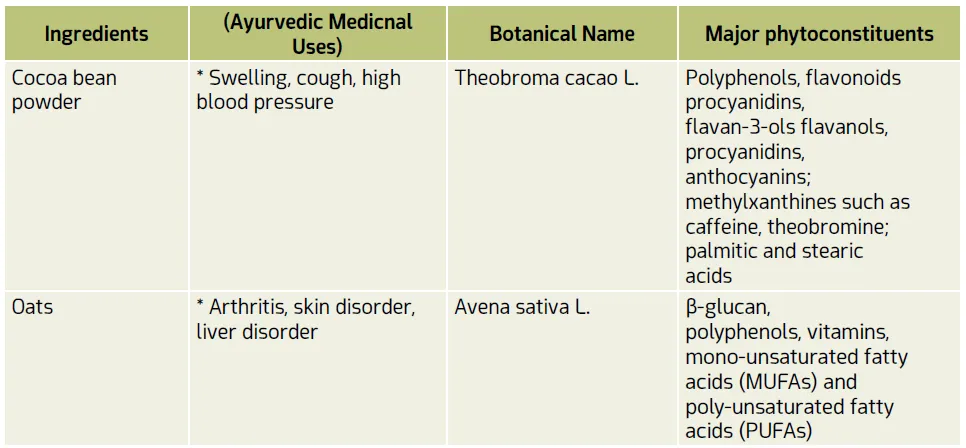
( * Other traditional medicine)
Jaggery and honey have been used for sweet taste. In India, jaggery is mainly prepared from sugarcane juice, although it is also prepared from palm juice etc. Jaggery is prepared by concentrating sugarcane juice in an iron vessel. Jaggery mainly contains traces of iron and other mineral salts which come from sugarcane juice. Jaggery cleanses the lungs, stomach, intestines, esophagus and respiratory tract. People who face dust in their daily lives are highly advised to take a daily dose of jaggery. It can protect them from asthma, cough-cold, chest congestion etc. Similarly, honey has been used for centuries in India and other civilizations as a sweetener and for its medicinal properties. Honey is used to treat various diseases like stomach disorders, skin irritation and ulcers. Since ancient times, man has been using the vegetation around him for his health benefits. Apart from Ayurveda, oats, cocoa bean, peanut powder have been used in many other traditional medical systems of the world. Peanuts are a rich source of protein and apart from this, other nutrients are also found in it. Studies show that peanuts can also be useful for weight loss and can protect against heart disease. Many important compounds are also found naturally in oats, which are the subject of research by scientists and today oats are considered an excellent nutritious grain and it is used to make various types of nutritious food. Cocoa bean has been used in Patanjali Nutrition Bar for taste as per the demand of time. The origin of cocoa bean is Amazon of America. In traditional American folk medicine, cocoa is considered helpful in the treatment of flu, inflammation, high blood pressure, cough. Apart from this, raisins, dates, orange peel, corn flakes, almonds, whey protein, soy protein, gum, walnuts etc. have also been used prominently in other nutrition bars. Today scientists from all over the world are engaged in discovering the nutrients, various chemical compounds etc. found in these plants. Through these researches, our ancient Ayurveda knowledge gets further strengthened and the Indian knowledge tradition gets full recognition at the global level. Taking forward this glorious tradition of Ayurveda, Patanjali has characterized health along with taste for complete nutrition as per the new standards (FSSAI etc.) and will continue to do so in the future.
||Om Sarve Bhavantu Sukhin: Sarve Santu Niramaya|
Sarve Bhadrani Pashyantu Ma Kashchit Dukha Bhagbhavet||
1. Source:https://www.mordorintelligence.com/industry-reports/india-energy-bar-market
लेखक

Advertisment
Latest News
01 May 2025 16:59:33
Invincible India The dream of a great, healthy, prosperous, capable, powerful and organized developed India is the resolution of all...





.jpg)


.jpg)